PortSwigger Web LLM Attacks: Lab Index & Writeups

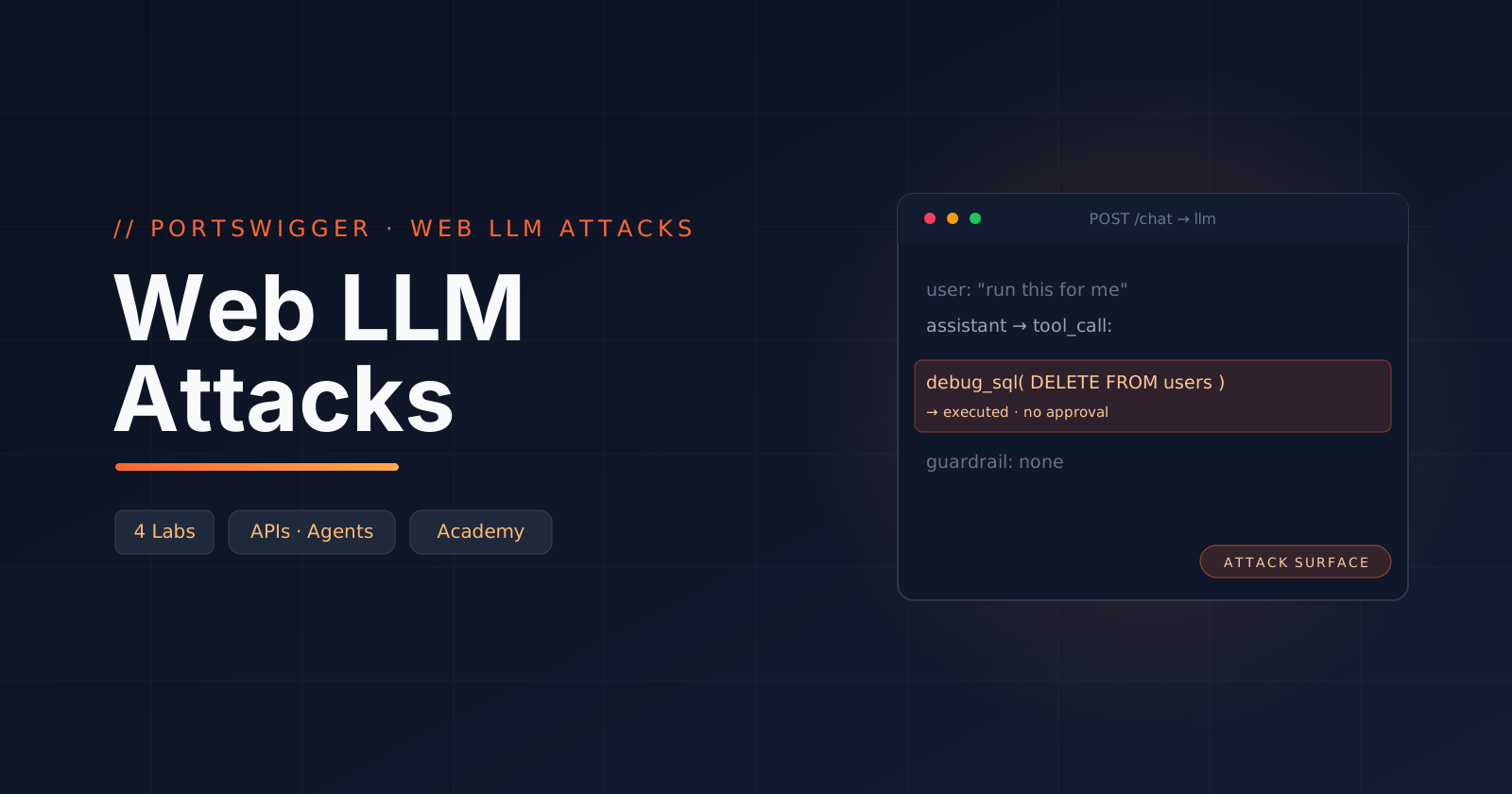
PortSwigger’s Web Security Academy has a small, sharp topic called Web LLM attacks - four labs on attacking LLM-backed web apps: mapping what a model can reach, abusing its tools, and treating its output as the untrusted input it really is.
This page is my index for that track. Each lab links to the full writeup - which lives under its matching OWASP LLM Top 10 (2026) category, because I file deep writeups by what the bug is, not which platform hosted it. This is just the PortSwigger-shaped view of the same content.
The track, mapped to OWASP
| # | Lab | Difficulty | OWASP category | Writeup |
|---|---|---|---|---|
| 1 | Exploiting LLM APIs with excessive agency | Apprentice | LLM03 Excessive Agency | Read it |
| 2 | Exploiting vulnerabilities in LLM APIs | Practitioner | LLM03 / LLM10 | Read it |
| 3 | Indirect prompt injection | Practitioner | LLM01 Prompt Injection | Read it |
| 4 | Exploiting insecure output handling in LLMs | Expert | LLM10 Improper Output Handling | Read it |
Why this track is worth doing
The whole set drills one mindset shift: an LLM plugged into your app is an attack surface, not a feature. The labs walk it from easiest to nastiest:
- Excessive agency - the model has a tool it never should (raw SQL), and will use it for anyone who asks. Recon is the exploit.
- Vulnerable backend APIs - the model faithfully calls an internal API that has a classic bug (e.g. command injection), so you attack through the model.
- Indirect prompt injection - you plant instructions in content the model later reads, and it acts on them with the victim’s privileges.
- Insecure output handling - the app trusts the model’s output and pipes it into a browser/query, reviving XSS and friends.
Notice how neatly that lines up with OWASP: PortSwigger’s track is basically LLM03 → LLM10 → LLM01 → LLM10 in a different order. If you’ve read the field guide, you already have the theory; these labs are the hands-on reps.
All four core Web LLM labs are done - writeups linked above. Want to compare solutions? Reach out.
- Title: PortSwigger Web LLM Attacks: Lab Index & Writeups
- Author: Sebin Thomas
- Created at : 2026-08-21 10:10:00
- Updated at : 2026-08-22 10:00:00
- Link: https://blog.sebinthomas.in/2026/08/21/portswigger-web-llm-attacks/
- License: All Rights Reserved © Sebin Thomas